Who Am I to Judge Bible Verse? Teachings in Christianity

The who am i to judge bible verse is one of the most quoted teachings in Christianity. Many people use it during conversations about faith, morality, and how Christians should treat others. Some believe it means that no one should ever judge another person. Others think it only warns against being hypocritical. Because this verse is often taken out of context, many readers want to know what Jesus actually meant.
Table of Contents
What Is the Who Am I to Judge Bible Verse?
The who am i to judge bible verse usually refers to Matthew 7:1, which says:
“Do not judge, or you too will be judged.” (Matthew 7:1 NIV)
At first glance, this verse seems very simple. Many people think Jesus was teaching that nobody should judge anyone under any circumstances. However, when you continue reading the chapter, Jesus explains that He was speaking against hypocritical judgment, not wise judgment. Many believers study this passage using a spiral bible because its lay-flat design makes it easier to read and compare the surrounding verses. Jesus wanted His followers to examine their own hearts before criticizing someone else.
Where Is This Verse Found in the Bible?
The verse appears in Matthew 7:1-5 during Jesus’ famous Sermon on the Mount. Here is the flow of the passage:
| Bible Passage | Main Teaching |
|---|---|
| Matthew 7:1 | Do not judge hypocritically. |
| Matthew 7:2 | The standard you use will be used on you. |
| Matthew 7:3-4 | Do not focus on another person’s small faults. |
| Matthew 7:5 | Remove your own faults before helping others. |
This passage teaches believers to practice self-examination before correcting someone else.
What Does Jesus Mean by “Do Not Judge”?
Many readers misunderstand the who am i to judge bible verse because they only read one sentence. The surrounding verses explain the deeper meaning. Jesus did not forbid all judgment. Instead, He condemned unfair, proud, and hypocritical judgment. Someone who ignores their own sins while pointing out another person’s mistakes acts in a way that Jesus rejected. Christians should first examine their own lives. After doing so with humility, they may lovingly help others grow in faith. The goal is restoration rather than condemnation.
Understanding the Context of Matthew 7
Context is one of the most important parts of Bible study. The Sermon on the Mount focuses on living with righteousness, mercy, forgiveness, prayer, generosity, and trust in God. Jesus challenged the religious leaders of His day because many appeared holy on the outside while hiding sinful attitudes inside. That is why the who am i to judge bible verse should never be separated from its surrounding verses. Jesus wanted people to replace pride with humility and criticism with compassion.
Does the Bible Say Christians Should Never Judge?
The simple answer is no. The Bible teaches believers to use wisdom and discernment. Christians should recognize right from wrong while avoiding self-righteous attitudes. Several Bible passages explain this balance.
| Bible Verse | What It Teaches |
| John 7:24 | Judge with righteous judgment. |
| Galatians 6:1 | Restore sinners gently. |
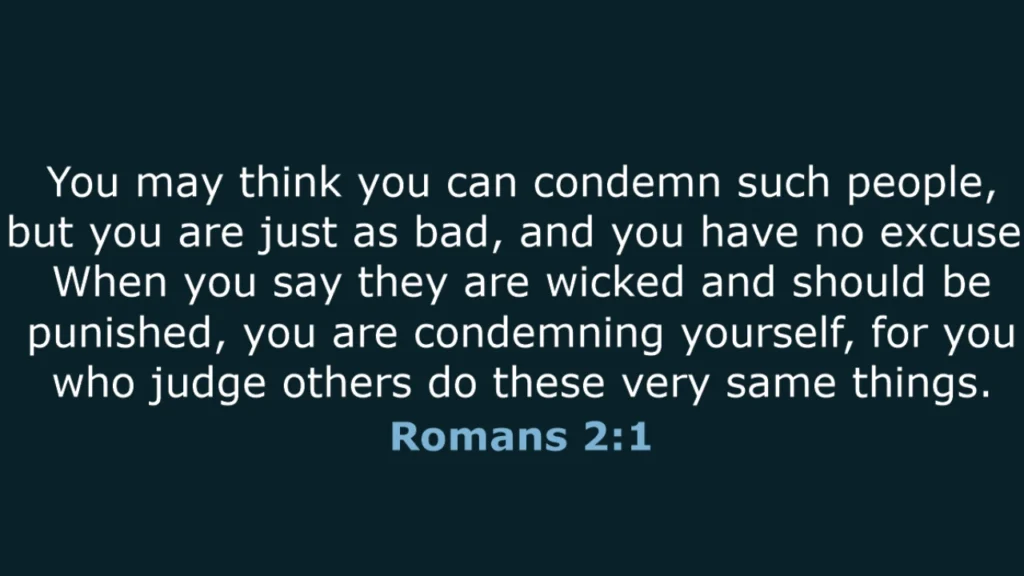
| Romans 2:1 | Avoid hypocritical judgment. |
| James 4:11-12 | Do not speak evil against others. |
| 1 Corinthians 5:12-13 | The church should address serious sin within the Christian community. |
These verses show that believers must balance truth with grace.
Why Is This Verse So Popular Today?
The who am i to judge bible has become popular because it applies to many modern situations. People often quote it during discussions about:
- Personal choices
- Social issues
- Family disagreements
- Church discipline
- Online arguments
Sometimes people use the verse correctly to remind others to avoid hypocrisy. Other times people use it to reject any discussion about right and wrong. The complete passage reminds believers to combine truth with love instead of choosing one over the other.
What Is Hypocritical Judgment?
Hypocrisy means pretending to be morally better than others while ignoring your own faults. Jesus used a memorable example. He described someone trying to remove a tiny speck from another person’s eye while ignoring a large plank in their own eye. This illustration showed how foolish it is to criticize others before dealing with personal sin. The lesson remains practical today. Before correcting another person, believers should honestly examine themselves.
Can Christians Correct Other Believers?
Yes, but the Bible gives clear instructions. Correction should come from love rather than anger. The purpose is restoration, not embarrassment. Healthy correction includes:
- Speaking gently.
- Checking personal motives.
- Using Scripture.
- Showing patience.
- Offering forgiveness.
When correction comes from genuine care, it reflects the character of Christ.
Common Misunderstandings About This Verse
Many myths surround the who am i to judge bible verse. Understanding these misconceptions helps readers interpret Scripture correctly.
| Myth | Biblical Truth |
| Christians can never judge anything. | Christians should practice righteous judgment. |
| Sin should never be addressed. | Scripture teaches loving correction. |
| Everyone should simply accept every behavior. | The Bible encourages both truth and grace. |
| Only perfect people can help others. | Humble believers can lovingly restore others. |
Reading the entire chapter removes much of the confusion.
Practical Lessons for Everyday Life
The who am i to judge bible verse teaches valuable lessons that apply every day.
- First, examine your own heart before criticizing someone else.
- Second, remember that everyone needs God’s grace.
- Third, speak kindly even when discussing difficult subjects.
- Fourth, avoid making assumptions about another person’s motives.
- Finally, focus on helping people instead of condemning them.
These habits strengthen relationships and reflect Christian character.
Why Humility Matters?
Humility sits at the center of Jesus’ teaching. Every believer struggles with weakness and needs forgiveness. Remembering this truth changes the way Christians interact with others. Instead of speaking with pride, believers can speak with compassion Instead of looking for faults, they can encourage spiritual growth. Humility does not ignore truth. Instead, it delivers truth with kindness and respect.
How This Verse Applies Today?
Modern life offers many opportunities to judge others quickly. Social media allows people to criticize strangers within seconds. News headlines encourage instant opinions. Personal disagreements often become public arguments. The who am i to judge bible verse reminds Christians to slow down before speaking. Wise believers seek understanding before reaching conclusions. They remember that only God knows every detail of a person’s heart.
Conclusion
The who am i to judge bible verse remains one of the Bible’s most powerful teachings because it challenges every believer to replace pride with humility. Jesus never encouraged people to ignore truth or accept sin without question. Instead, He warned against judging others while ignoring personal faults. When Christians understand the complete context of Matthew 7, they see a balanced message that combines truth, mercy, humility, and love.